Lessons 3 · Real situations
Indoors without flash
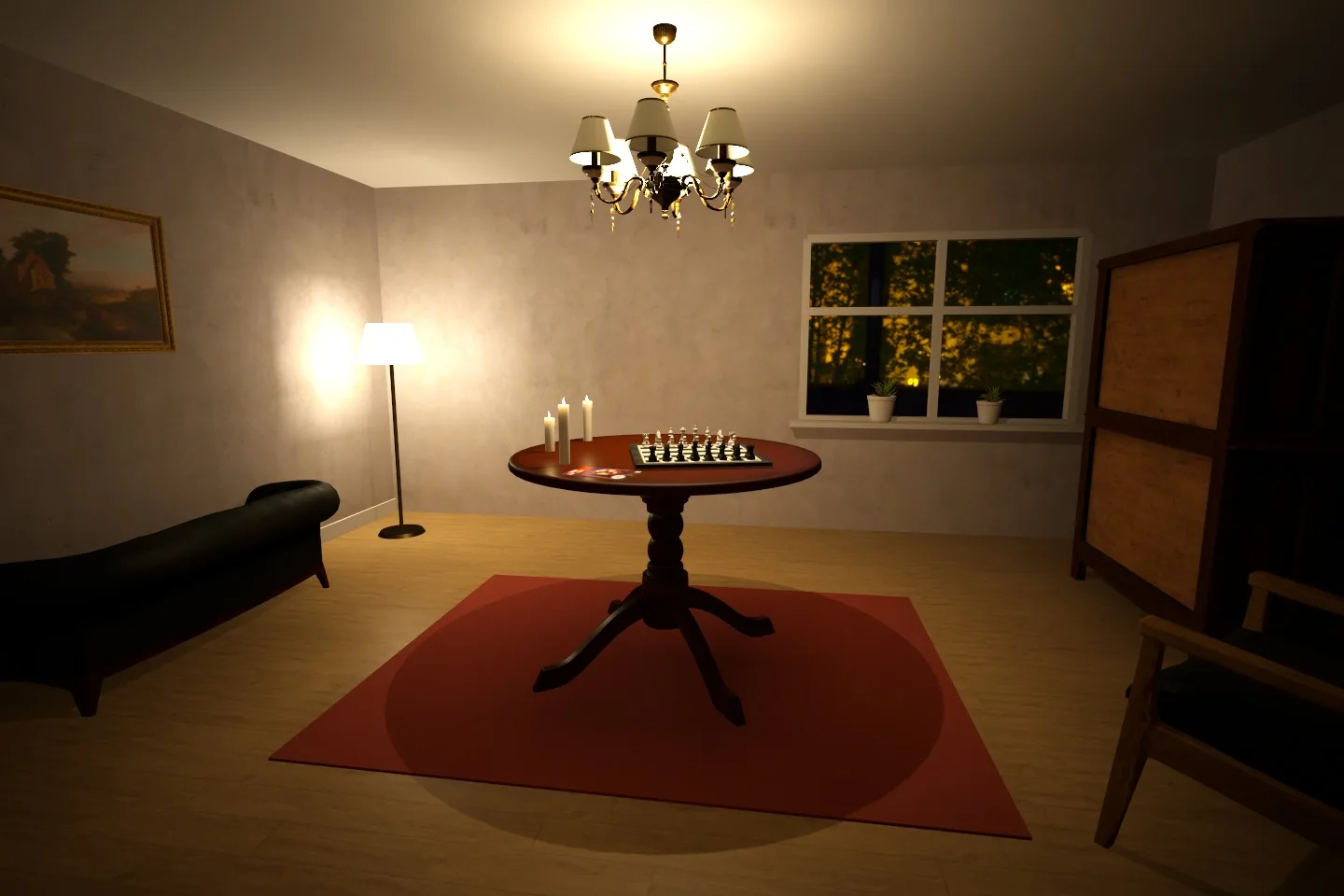
Indoor light looks bright to your eyes, but to a camera a living room in the evening is about as dark as a city street at night. A typical room lit by lamps is around six to eight stops darker than a cloudy day outside. That is why indoor photos come out blurry or grainy: the camera is starved of light.
It is also why indoor photos can be beautiful. Warm lamps and candles create pools of light and shadow that a flash would wipe out. Keeping that mood is the reason to shoot without flash.
Typical settings
| Situation | Aperture | Shutter | ISO |
|---|---|---|---|
| Evening living room, people still | f/1.8 to f/2.8 | 1/60 to 1/125 s | 1600 to 6400 |
| Restaurant, food on the table | f/2 to f/4 | 1/30 to 1/60 s | 1600 to 6400 |
| Kids or a party, moving | f/1.8 to f/2.8 | 1/250 s | 3200 to 12800 |
| The room itself, on a tripod | f/5.6 to f/8 | 1 to 4 s | 100 |
A fast prime earns its keep indoors. An f/1.8 lens lets in about two and a half stops more light than a kit zoom at f/4.5, which is the difference between ISO 12800 and ISO 2000.
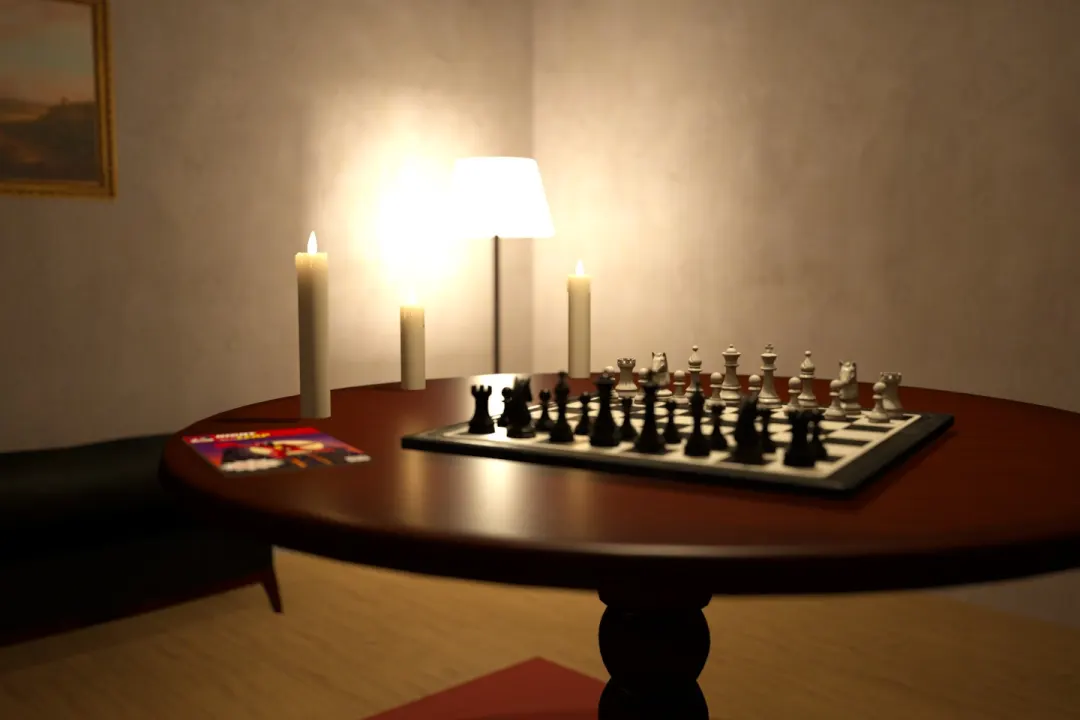
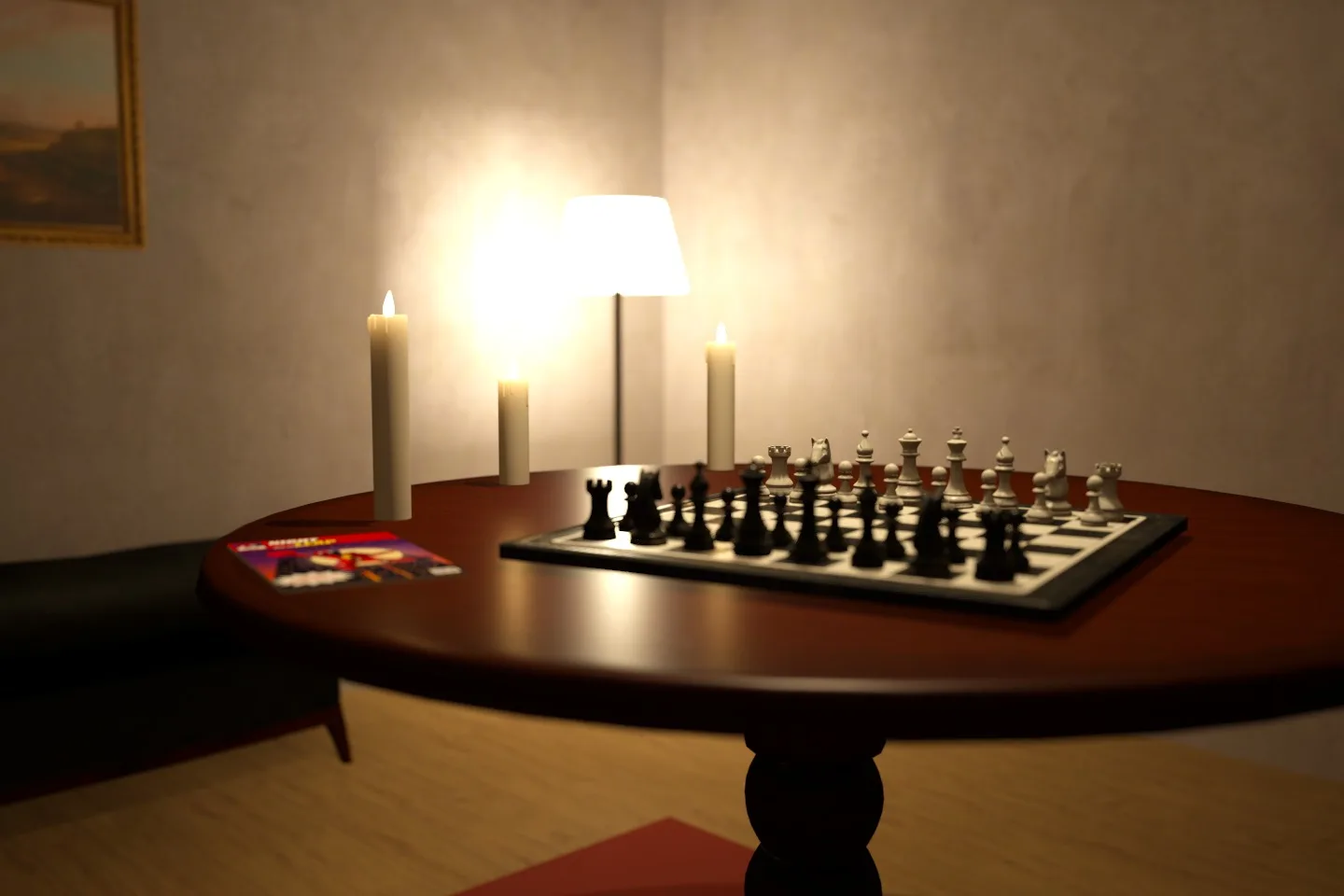
Try this: Look at the shutter speed and ISO the camera picks at f/1.8. Close the aperture to f/5.6 and see the ISO jump. Then try the Living room view, which is darker away from the lamps.
Wide apertures that make candlelight possible also leave very little in focus. With the comic and the candles a few centimetres apart, you have to choose which one is sharp.
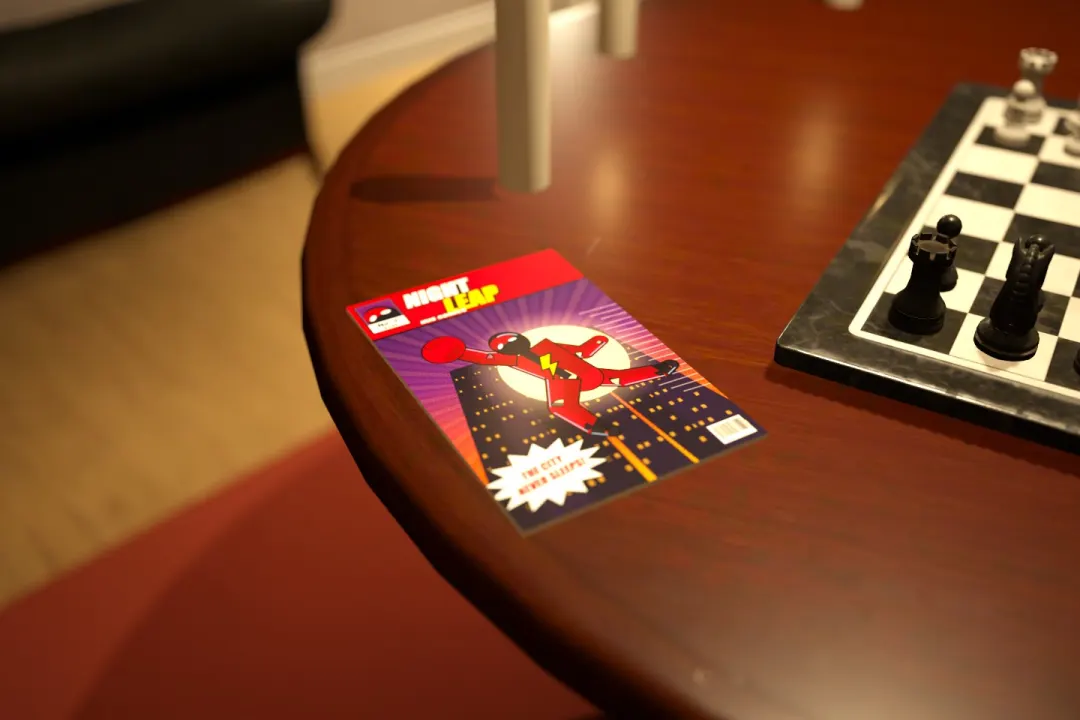
Try this: Click the comic to focus on it, then click a candle flame. At f/1.8 only one of them can be sharp; at f/8 both are, but the shutter or ISO has to make up the light.
Lamps, candles and colour
Light has a colour. Daylight is neutral, household lamps are warm orange, candles are deeper orange still. Auto white balance usually removes some of the warmth. That can look accurate but cold. For a cosy look, choose the "incandescent" or "tungsten" setting and then nudge it warmer, or set a colour temperature of about 3200 K. In a room lit by both a window and lamps, the camera can only correct one; let the other drift, or switch off one source.
Window light
By day, a window is the best light in the house: big, soft and directional. Put your subject beside it, not in front of it, at a slight angle. Turn off room lights so the colours do not mix. Expose for the lit side of the face and let the far side fall into shadow.
Why not the built-in flash?
A small flash on the camera lights everything from straight ahead. Faces go flat and shiny, the background goes black, and the warm lamps that made the room inviting disappear. If you do use a flash, bounce it off the ceiling or a wall to spread it out, or turn its power down so it only fills shadows.