Lessons 3 · Real situations
Freezing action
To freeze motion, the subject must move less than about one blurred dot's worth across the sensor while the shutter is open. How fast that is depends on three things: how fast the subject moves, how far away it is, and how much your lens magnifies it. A car across the street needs a much faster shutter than a car on a distant hill.
Direction matters too. Something crossing the frame blurs far more than something coming straight at you, which is why a runner heading towards the camera is easier than one running past.
How fast for what
The slowest shutter speed that keeps each subject fully sharp when it moves across the frame, on full frame:
| Subject | Speed | Lens and distance | Shutter |
|---|---|---|---|
| Person walking | 1.4 m/s | 50 mm at 6 m | 1/500 |
| Child running | 4 m/s | 85 mm at 8 m | 1/1600 |
| Dog running | 8 m/s | 135 mm at 15 m | 1/3200 |
| Cyclist | 8 m/s | 70 mm at 10 m | 1/2000 |
| Football kick | 20 m/s | 200 mm at 30 m | 1/5000 |
| Car in town | 14 m/s | 50 mm at 15 m | 1/2000 |
"Fully sharp" means the motion during the exposure is smaller than the 29 µm sharpness limit. A slightly slower shutter often looks fine on a phone screen, and a hint of blur in arms and legs can even help show movement.
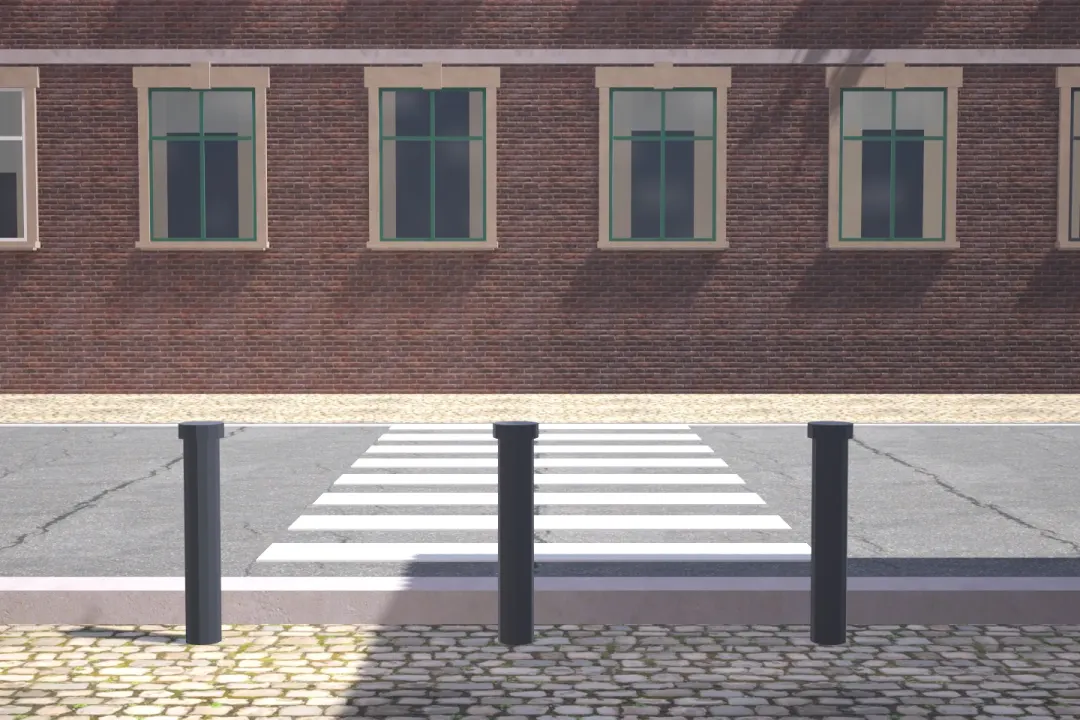
Try this: Take a photo at 1/30 s, then at 1/250 s and 1/2000 s. Find the slowest speed that still shows the passing car crisp. Auto ISO keeps the brightness the same while you change the shutter.
The same rule works for anything that moves. A car at city speed needs about 1/1000 to freeze, and so does a leaf caught by a gust; both turn into streaks at slower speeds.
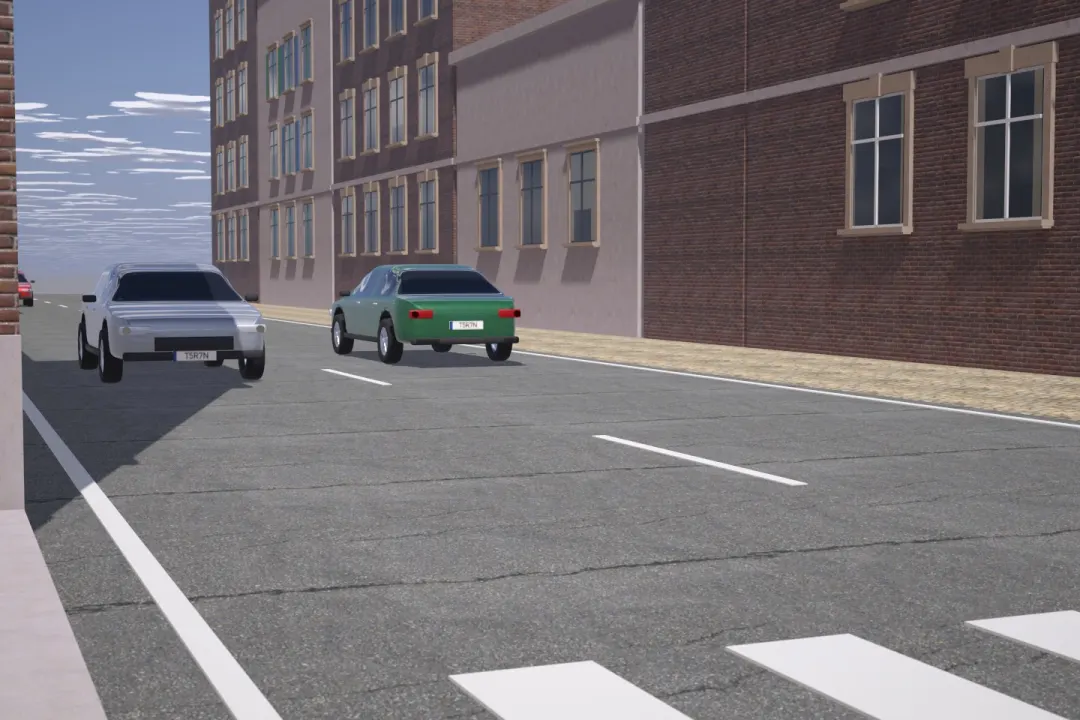
Try this: Wait until a car is in the frame and take a photo at 1/1000: the car freezes and its plate is readable. Then try 1/30 and see it smear.
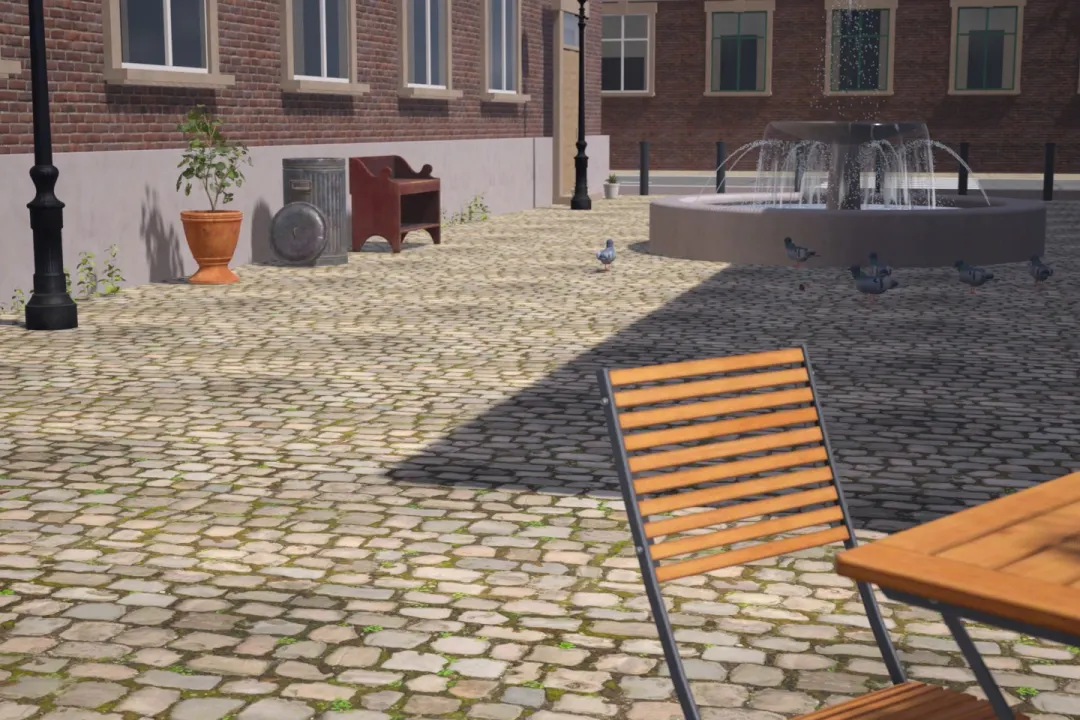
Try this: Watch for a gust that lifts a leaf, then take the photo. At 1/500 it hangs in mid-air; at 1/15 it becomes a brown streak.
Finding the light
Each stop of faster shutter needs a stop of light from somewhere else. In daylight that is easy. Indoors or at dusk you will run out:
- Open the aperture as wide as it goes. A fast zoom or prime is the best investment for sport and kids indoors.
- Let Auto ISO rise. ISO 6400 at 1/500 s is a better photo than ISO 800 at 1/60 s.
- Only then compromise on the shutter, and time your shot for the peak of a jump, when the subject is momentarily still.
Autofocus, tracking and burst
- Use AF-C with subject tracking or detection (people, animals, birds, vehicles). Start tracking before the action, not when it happens.
- Use burst (continuous drive). Modern bodies shoot 10 to 30 frames a second or more. Shoot short bursts through the moment and pick the best frame.
- Some cameras have a pre-capture mode that records frames from just before you fully press the shutter. Perfect for birds taking off.
Panning
Freezing everything is not the only way to show speed. With panning, you follow the subject with the camera during a slower exposure, around 1/30 s to 1/125 s. The subject stays sharp because it does not move relative to the camera, while the background streaks behind it. Start the swing before the subject arrives, press during the swing and keep following after the click.